
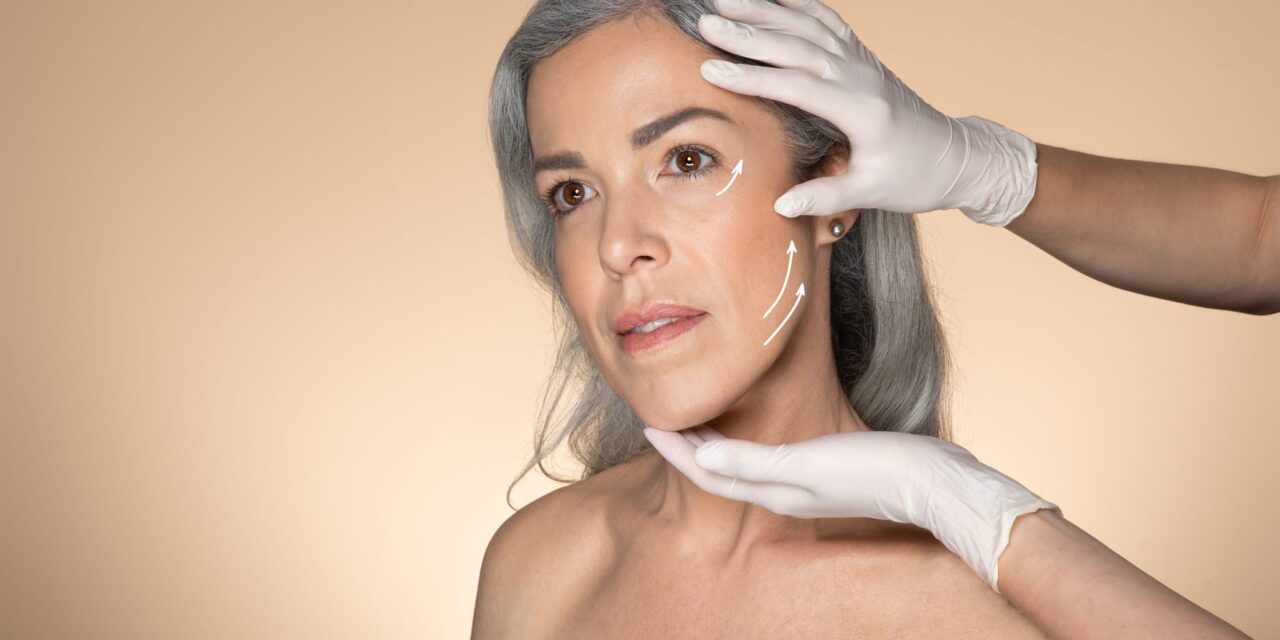
Concerns about skin flap viability have long kept many surgeons from combining these procedures. A new case series takes a closer look at whether that caution is still warranted.
Interview by Alyx Arnett
Combining deep skin resurfacing with facelift surgery has long been debated because of concerns that resurfacing elevated skin flaps could increase the risk of skin necrosis and impaired wound healing. As a result, many surgeons continue to stage the procedures rather than perform them during the same operation.
In a recent study published in Plastic and Reconstructive Surgery, board-certified plastic surgeon Melinda Lacerna Kimbrell, MD, reported on her experience performing concurrent face and neck lifts and deep plasma resurfacing in 96 consecutive patients treated over an eight-year period.
In this Research Q&A, Kimbrell discusses what prompted the study, the technical considerations behind combining the procedures, how she counsels patients about the approach, and where she sees regenerative therapies and future research heading.
[Editor’s note: Read the study “Taking Face Lifts to the Next Level: Case Series Reflecting the Safety and Efficacy of Plasma Resurfacing with Face and Neck Lifts,” in Plastic and Reconstructive Surgery.]
What prompted you to reexamine the evidence behind combining deep skin resurfacing with facelift surgery?
There is a long-standing hesitation among plastic surgeons to combine facelifts with deep skin resurfacing. However, this is not substantiated by the literature or my extensive clinical experience. I have almost 10 years’ experience combining facelifts and deep plasma resurfacing, and prior to this, I combined CO2 resurfacing with facelifts and have about eight years’ experience with this. This is why I published my case series and why I performed this literature review.
In my opinion and my experience, the best face and neck lift results are those combined with plasma resurfacing and fat grafting, not only for the three-dimensional correction of aging, but also there is synergy with healing and neocollagenesis, neoelastogenesis, and neovascularization. When multiple tissue levels are rejuvenated, healing and regeneration occur in many levels, so the end summary is better than when performed individually or staged. In addition, I want to remind facelift surgeons, do not forget to address and improve the skin. Otherwise we are only doing a sub-optimal and incomplete rejuvenation with face and neck lifts alone.
What findings surprised you the most, and did any of the results challenge your expectations going into the study?
I was pleasantly surprised by how statistically significant topical application of human dermal fibroblast exosomes decreased healing times to re-epithelialization and decreased complications. This is further discussed in my other paper recently published in Aesthetic Surgery Journal, “Enhanced healing and outcomes with human dermal fibroblast exosomes: Case series combining deep helium radiofrequency plasma skin resurfacing, facelifts and exosomes.”
One of the study’s central conclusions is that deep plasma resurfacing can be performed concurrently with face and neck lifts without increasing complications such as skin necrosis. What are the most critical technical considerations that make this combined approach safe, and where do you think surgeons are most likely to encounter pitfalls?
The face and neck lift should be performed first. If the skin flaps look dusty or questionable at the end of the case, do not perform plasma skin resurfacing, and wait another three to six months. In addition, deep plasma skin resurfacing is a very advanced technique. Prior to performing it with facelifts, the surgeon should have experience with performing the procedure alone, so they know the tissue response and what is the normal healing process.
Start with lighter Fitzpatrick skin types I-III, and start with lighter and medium depth treatments first before performing deeper resurfacing and using higher energies. Develop scientifically sound pre- and post-op skin protocols, and incorporate regenerative medicine techniques as much as possible (fat grafting, nanofat, PRP, SVF, exosomes).
The study reports improvements not only in wrinkle reduction but also in measures such as skin age, elasticity, and ultraviolet damage. How should plastic surgeons interpret these findings when counseling patients about expected outcomes, particularly compared with traditional staged rejuvenation procedures?
One weakness of my study is the lack of comparison of the objective data with staged procedures (facelifts alone or plasma resurfacing alone). I would also counsel patients that the recovery may seem longer, but perhaps still overall shorter when compared to the total recovery of staged procedures. For instance, the combined procedure may have a two-week downtime, compared to facelift only (one-week downtime), deep resurfacing only (two-week downtime). Less anesthesia exposure is also a plus.
Your protocol also incorporated fat grafting and, more recently, topical nanofat and exosomes during recovery. Based on your experience, how much do you believe these regenerative therapies contribute to healing and overall results, and what evidence is still needed before they become part of standard practice?
I firmly believe in these regenerative modalities. Not only do they accelerate the healing process, but I believe they help the outcome improve over time, for many years. The evidence for these modalities has been well established in the literature, especially for fat grafting, nanofat, and SVF. More recently, more evidence is in favor of exosomes. Please refer to my aforementioned publication.
What studies would you most like to see next, and what questions about combined plasma resurfacing and facial rejuvenation remain unanswered?
I would love to compare my findings to staged procedures, such as face and neck lifts alone and deep plasma skin resurfacing alone. I would also like more patients measured objectively with newer computerized imaging systems such as Aura. We also know that regenerative modalities enhance healing and outcomes, so it would be great to see what prejuvenation with these therapies can do.
I would also love to see how we can improve outcomes and healing rates even more with autologous regenerative modalities when we add “biohacking” pre-operatively. For example, what if we pre-treat our patients (a few months prior to surgery) with peptides, photobiomodulation, cryotherapy, enhanced oral nutrition and IV therapies, hyperbaric oxygen, and infrared saunas? I believe the future is not just aesthetics anymore but also longevity and wellness.