
Peninsula’s ZenTite and Microultra platforms incorporate design features intended to reduce discomfort and improve workflow consistency in aesthetic settings.
Peninsula Medical Group and its US partner, Boston Aesthetics, are spotlighting an engineering approach designed to make energy-based aesthetic treatments more tolerable while maintaining clinical effectiveness. The companies recently featured this direction on the Nasdaq tower in Times Square, where a rotating display highlighted dermatologists and laser specialists who have contributed to the devices’ development.
The Shenzhen-based medtech group used the segment to showcase two of its newest systems—the Peninsula Microultra micro-focused ultrasound platform and the ZenTite RF microneedling system. Both devices have received Class III approval from China’s National Medical Products Administration (NMPA), and ZenTite has been cleared by the US Food and Drug Administration.
Collaboration With Clinicians
Peninsula’s development model involves input from dermatologists and aesthetic physicians who use the devices in both hospital and private practice settings. According to the company, this collaboration has informed design decisions related to treatment comfort, recovery expectations, and reproducibility.
Clinicians using Peninsula devices have authored more than 100 peer-reviewed publications on treatment parameters, safety, and patient experience. Earlier this year, several presented related findings at the annual meeting of the American Society for Laser Medicine and Surgery, the company notes in a release.
ZenTite RF Microneedling
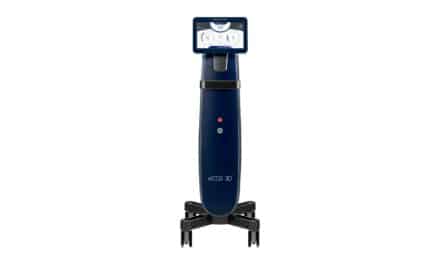
ZenTite is Peninsula’s RF microneedling platform engineered with features intended to improve patient comfort. Its design includes sequential needle firing, multi-layer energy delivery from a single insertion, and vacuum-assisted skin stabilization to help distribute heat more evenly and reduce sharp sensations during treatment.
US dermatologists who have used the system report appreciating its comfort-related engineering, according to a release from the company, with some citing its vacuum-assisted tips and multi-depth capability.
Peninsula Microultra Ultrasound
Peninsula’s Microultra platform is the company’s latest micro-focused ultrasound device. In China, where it is Class III–approved, clinicians report that its energy distribution design appears to reduce the deep discomfort often associated with ultrasound lifting treatments. According to these clinicians, patients describe the sensation more as “tightening” and may be more willing to complete treatment plans.
Microultra is undergoing multiple U.S. studies and is expected to launch domestically in the near future. Boston Aesthetics Medical Affairs Manager Dr Ao Li says in a release that the organization plans to continue introducing Peninsula’s technologies to additional global markets.
Boston Aesthetics’ US Approach
Boston Aesthetics leads US commercialization, guided by Shawn Cheng-Shiao Ho. With a background in biomedical engineering and therapeutic ultrasound research, Ho focuses on adapting Peninsula’s engineering frameworks—summarized as STEP (Smooth, Targeted, Effortless, Personalized)—for US med spas and aesthetic practices. The strategy includes training, implementation support, and workflow consistency for multi-location groups.
Long-Term Development Model
Peninsula and Boston Aesthetics emphasize an ongoing feedback loop with clinicians to refine treatment protocols, energy parameters, and training materials. Their model places emphasis on long-term device usage, reproducible results, and support structures rather than single-point product launches.
“True medical aesthetic technology should stand on serious academic ground and still fit into ordinary people’s daily lives,” Ho says in a release. “If a device looks impressive on a conference slide but doesn’t help clinicians offer comfortable, appropriate treatments that patients can actually accept, we haven’t really done our job.”
Photo caption: Peninsula Medical Group and Boston Aesthetics displayed their “Engineered Comfort” concept on the Nasdaq tower in Times Square.
Photo credit: Peninsula Medical Group