
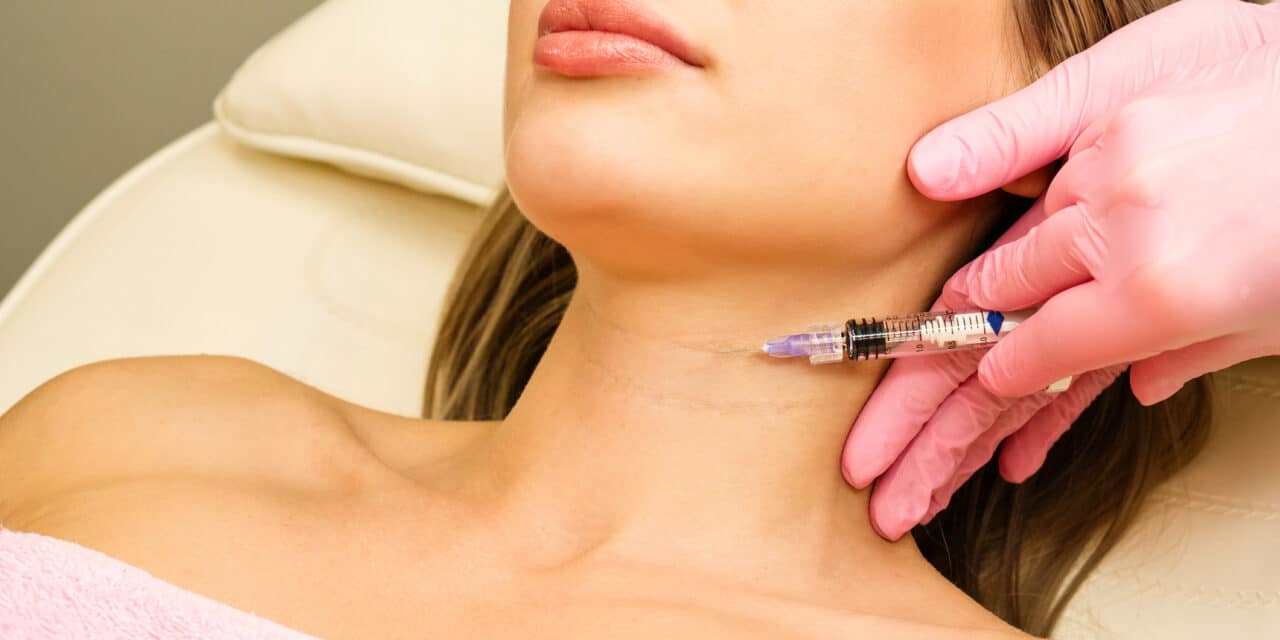
A principal investigator discusses new randomized, controlled data on VYC-12L, a hyaluronic acid injectable, studied for reducing transverse neck lines and improving overall neck appearance, with implications for non-surgical neck rejuvenation in aesthetic practice.
Non-surgical options for improving neck quality—particularly horizontal “necklace” lines and crepey texture—remain an area of high patient demand and evolving clinical innovation. A multicenter, evaluator-blinded, randomized controlled study recently examined the effectiveness and safety of VYC-12L, a hyaluronic acid injectable previously approved for cheek smoothness, for reducing transverse neck lines and improving overall neck appearance. The data, presented at the 2025 American Society for Dermatologic Surgery Annual Meeting, demonstrated rapid, clinically meaningful improvement, durability through six months, and a favorable safety profile supportive of repeat treatment.
To better understand the clinical implications for aesthetic practices, Plastic Surgery Practice spoke with Joely Kaufman, MD, a board-certified dermatologist and director of Skin Associates of South Florida in Coral Gables, who served as a principal investigator on the study and shares how the findings may translate into everyday patient care.
Plastic Surgery Practice; From a clinical standpoint, what motivated your team to study VYC-12L specifically for transverse neck lines, and how does this indication differ from its established use for cheek smoothness?
Joely Kaufman, MD: Our motivation was driven by the significant unmet patient demand for non-surgical neck treatments to address visible aging and sun damage, including changes in texture and horizontal necklace lines. Neck appearance is a top aesthetic concern. VYC-12L is currently approved for cheek skin smoothness, enhancing hydration without volumizing. For the neck, the focus is on reducing horizontal neck lines and improving overall neck appearance, potentially making it the first HA injectable in the U.S. for this specific indication.
PSP: Plastic surgeons often want to understand the rigor behind aesthetic studies. Can you walk us through the study design—particularly the evaluator-blinded, randomized approach—and why that was important for validating the results?
Kaufman: Our study utilized a multicenter, evaluator-blinded, randomized, controlled Phase 3 design. The multicenter approach provides broad applicability of the findings. Importantly, the evaluator-blinded methodology minimized assessment bias by ensuring that evaluating investigators were unaware of which patients received treatment. The randomized controlled groups allowed for a direct, unbiased comparison of VYC-12L’s effects directly against a control, definitively validating its efficacy and safety.
PSP: You saw an 80% ATNLS responder rate at one month. For surgeons, what does a one-grade improvement actually look like in practice, and how should they interpret this in terms of real-world aesthetic change?
Kaufman: A one-grade improvement on the Aesthetic Transverse Neck Lines Scale, a validated scale, (ATNLS) signifies a visually perceptible, clinically meaningful reduction in neck lines. This is not just a statistical metric; it translates to real-world aesthetic change and patient satisfaction. Patient-reported outcomes reinforce this, as nearly 90% of patients reported overall improvement, and they felt “significantly less bothered” by their neck appearance.
PSP: Neck treatments can be sensitive due to thin skin and mobility. What injection techniques—needle vs cannula, depth, volume strategy—proved most effective or consistent across investigators?
Kaufman: We observed consistent effectiveness with both a 32G needle-only approach and a 32G needle paired with an optional 25G cannula. A subgroup analysis showed high responder rates for both techniques: 94.4% for needle-only, and 84.3% for needle plus cannula achieved at least a 1-grade improvement. Injections were administered sub dermally and/or intradermally. The study protocol allowed for an initial volume of up to 3 mL (with a median 2.0 mL) and optional touch-ups up to 2 mL showed consistent results, demonstrating flexible yet effective techniques suitable for the delicate neck area.
PSP: Safety is always top of mind. What should plastic surgeons know about the injection site reactions and low rate of treatment-related adverse events, and how do these findings compare with what we typically see with HA injectables in the face?
Kaufman: VYC-12L demonstrated an excellent safety profile and was very well tolerated. Treatment-related adverse events (TEAEs) were mild, occurred in only 4.8% of patients, and were consistent with typical HA injectable profiles. Common reactions were mild, transient injection site papules (3.8%) and masses (≤1.0%), all resolving within two weeks without sequelae. These findings are consistent with the established safety profile of HA injectables in the face, indicating similar manageability and predictability.
PSP: Durability and repeat treatments influence how surgeons counsel patients. Based on your six-month follow-up and the repeat-treatment results, how should clinicians think about the longevity of outcomes and the ideal maintenance schedule with VYC-12L?
Kaufman: The effects of VYC-12L were sustained through 6 months, with 66.0% of patients maintaining a 1-grade ATNLS improvement. Crucially, the data supports repeat administration: patients who received treatment at month six not only maintained but often improved upon initial results, with supportive safety data. Clinicians can confidently advise patients that results last at least six months, with an ideal maintenance schedule involving re-treatment at or around the six-month mark to sustain or enhance their aesthetic improvement. PSP
Photo: ID 284323225 © Vagengeym | Dreamstime.com