
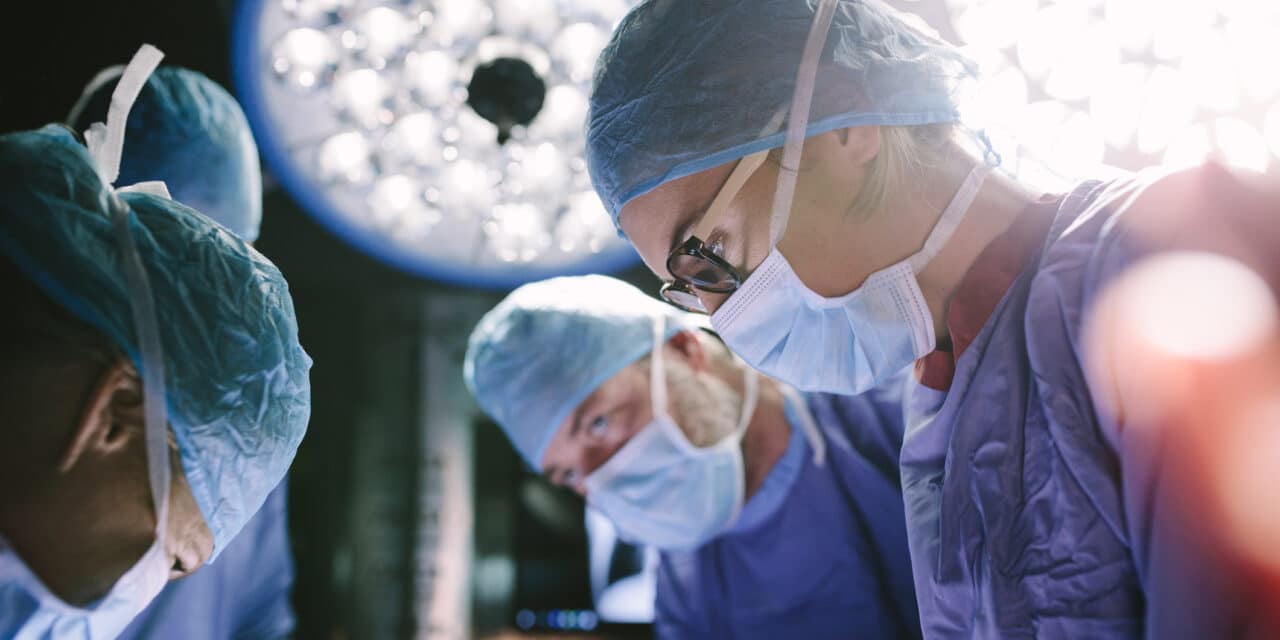
Surgeons at Delray Medical Center have published early clinical experience with SMART, a scaffold-based reconstructive technique designed for selected complete muscle transection injuries where suturing alone may be mechanically unreliable.
Plastic Surgery Trauma Associates announced the publication of a scaffold-based reconstructive technique for selected severe muscle transection injuries in PRS Global Open. The technique, known as SMART (Sandwiching Muscle Acellular Reconstruction Technique), was developed for injuries in which suturing alone may not provide a reliable repair because stitches can cut through damaged muscle tissue under tension.
Published Clinical Experience
The technique was developed and evaluated by surgeons at Delray Medical Center, a Level I trauma center in Florida. According to Plastic Surgery Trauma Associates, the clinical experience was reviewed through applicable institutional oversight processes at the center, where the team manages complex traumatic wounds and severe soft-tissue injuries requiring urgent functional restoration.
The team reported six cases involving different anatomic regions in early clinical use. During available follow-up, no construct failures or wound complications were reported. One first responder with a severe muscle injury that threatened his ability to work was treated with SMART and later returned to duty.
Technique Designed to Address Mechanical Failure Point
According to the authors, complete muscle transections present challenges because muscle tissue differs from tendon. Sutures placed directly through completely severed muscle under tension can cut through the tissue rather than maintain the repair.
SMART uses paired biologic scaffolds composed of acellular extracellular matrix materials, already in reconstructive use, positioned on either side of the severed muscle. The construct is intended to distribute force across the injury and reduce tension concentrated at individual suture points.
“Muscle is soft contractile tissue, not tendon. When sutures are placed directly through completely severed muscle under tension, they can behave like tiny saws and cut through the tissue,” said Andrew Klapper, MD, plastic and reconstructive surgeon at Delray Medical Center. “We are encouraged because SMART may give surgeons a practical option for selected injuries where acute reconstructive options have historically been limited. It is still early and needs broader evaluation, but the goal is to support function, not simply close a wound.”
Addressing Limited Acute Reconstruction Options
The authors noted that complete muscle transections have historically had limited acute reconstructive options and that SMART was developed to address that gap.
The technique was also presented at an international plastic surgery meeting focused on innovation in trauma and wound care, where it prompted discussion regarding treatment options for difficult muscle reconstruction cases.
“SMART is not about adding complexity,” said Anthony Dardano, DO, chief of plastic surgery at Delray Medical Center. “It is about using familiar reconstructive materials in a configuration that addresses a specific mechanical failure point in severe muscle trauma.”
Need for Further Evaluation
The authors described SMART as an early technique intended for selected injuries rather than a universal solution. They stated that publication of the technique may allow other reconstructive and trauma teams to evaluate its indications, limitations, and long-term outcomes.
“Trauma care is not only about survival—it is about whether patients can return to work, independence, and normal life,” said Peter Gonzalez, MD, chief of trauma at Delray Medical Center. “For injuries that historically had very limited acute options, SMART gives our team another strategy focused on restoring function.”
Photo: ID 99469080 © Ammentorp | Dreamstime.com