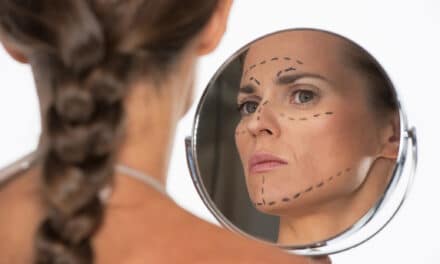

With more younger adults and men seeking eyelid surgery, Sean McNally, MD, PhD, discusses the factors driving interest and the importance of addressing both surgical and nonsurgical concerns.
Demand for blepharoplasty is expanding beyond its traditional patient demographic, with younger adults and men increasingly seeking eyelid surgery. Social media, celebrity procedures, and greater access to information about surgical outcomes are influencing patient expectations and consultations. As interest grows, surgeons are navigating questions about patient selection, the limitations of blepharoplasty, and the role of complementary treatments in facial rejuvenation.
In this interview with Plastic Surgery Practice, Sean McNally, MD, PhD, a board-certified plastic surgeon and lead provider at Doctor PDX and Réviance in Portland, Ore., discusses changing patient demographics, evolving expectations, and his approach to combining surgical and nonsurgical treatments.
Plastic Surgery Practice: Recent statistics show continued growth in eyelid surgery. From your perspective, what factors are driving that demand, and how do today’s blepharoplasty patients differ from the patients you were seeing 5 or 10 years ago?
Sean McNally, MD, PhD: Social media is a huge driver. The amount of content for patients getting upper blephs at a younger age is skyrocketing. People are seeing recovery photos, before-and-afters, and real patient experiences every day, which has made the procedure feel much more accessible than it did 5 or 10 years ago. Also, there are hundreds of celebrities getting it, which gives it a lot of exposure and helps people clearly see the big difference blepharoplasties make. It’s also become one of the most common surgical procedures in the country, with more than 300,000 eyelid procedures performed annually in recent years.
There’s a huge difference, today’s patients tend to come in with a much better understanding of what bothers them, whether that’s upper lid hooding, lower lid bags, or skin excess affecting their appearance or even their field of view. Before they used to ask me what they could do about their eyelids and now they come in and say “I want a bleph”, which never happened five to 10 years ago, plus I’m seeing a lot of younger patients, before it was only 50+ women, and now I’d say 30+.
PSP: What are the most common anatomical concerns bringing patients in for upper or lower blepharoplasty today, and have you noticed any shifts in patient expectations regarding outcomes?
McNally: Typically it’s excess skin of the upper lids. Many patients describe feeling like the skin is sitting on their eyelashes or making them look tired, and in some cases the excess skin can even affect their peripheral vision. For lower lids it’s typically bags or skin texture issues. I think expectations have shifted now because patients are better informed about what interventions do and don’t do so they understand the limitations of a single procedure. Patients are much more educated about anatomy and aging than they used to be, so they often come in already understanding that one procedure isn’t going to address every concern around the eyes.
PSP: Are you seeing more patients who view blepharoplasty as an alternative to more extensive facial rejuvenation procedures, such as facelifts or brow lifts? If so, how are you counseling them about what eyelid surgery can and cannot accomplish?
McNally: No, I’m not seeing that. What I am seeing is a more a cost-conscious start to their facial rejuvenation journey, as an in-office, totally awake upper bleph can start at about $3,000.
Blepharoplasty in its most basic form is a skin removal procedure, although it may also involve fat removal, fat repositioning, or muscle work depending on the patient. A lot of the counseling revolves around helping patients understand exactly what problem we’re trying to solve. If someone has brow descent, facial laxity, volume loss, or significant skin quality concerns, those issues may require additional procedures or treatments. The goal is helping patients understand where blepharoplasty can make a meaningful difference and where its limitations are.
PSP: The eye area is often one of the first regions to show signs of aging. How are you integrating blepharoplasty with other surgical or nonsurgical treatments to achieve more comprehensive facial rejuvenation?
McNally: I always discuss skin care, microneedling, IPL, Botox, and lasers with patients. If they’re concerned about facial aging they need to understand what they can do now to slow the process instead of just waiting in between larger surgical procedures.
The eye area ages in multiple ways, not just from excess skin. Skin quality changes, muscle activity changes, and volume changes all contribute to the aging process. That’s why combining treatments often provides a more complete result than relying on surgery alone. Bleph is excellent for excess skin and, depending on the patient, can also involve fat removal or repositioning. But it won’t improve sun damage, pigmentation, fine lines, or skin quality by itself. That’s where things like lasers, IPL, microneedling, and a good skincare regimen become important parts of the overall plan.
PSP: Have you observed any notable trends among male patients seeking blepharoplasty, and are their goals, concerns, or treatment plans different from those of female patients?
McNally: I’m seeing more male patients concerned about looking “weird” postop which I attribute to recent celebrity postops. I’ve also seen an increase in men interested in brow lifts. Also male patients are very focused on maintaining a natural appearance. For example, most aren’t looking to dramatically change how they look and they’re not coming in because they want cosmetic surgery. They are coming in because they feel they look tired, angry, or older so a bleph is one of the more straightforward ways to address those concerns. In addition, they leave looking more refreshed while still looking like themselves. I think some of the highly publicized celebrity results over the last few years have made men more cautious (like Tom Cruise and Bradley Cooper), so they’re asking more detailed questions about technique, recovery, and long-term outcomes than they used to.
PSP: Based on your recent experience, what clinical pearls or lessons have become particularly important when evaluating and treating blepharoplasty patients in today’s aesthetic environment?
McNally: A single surgical approach without additional treatments like laser will almost never be the right answer for truly comprehensive rejuvenation around the eyes for any patient.
One of the biggest lessons is making sure patients understand that surgery and skin quality are two different issues. Even a technically perfect blepharoplasty won’t address every concern if the surrounding skin, texture, or pigmentation issues aren’t being treated as well. The best outcomes come from taking a comprehensive approach to the eye area rather than relying on a single intervention to do all the work. PSP
Photo: ID 13865705 © Tarragona | Dreamstime.com