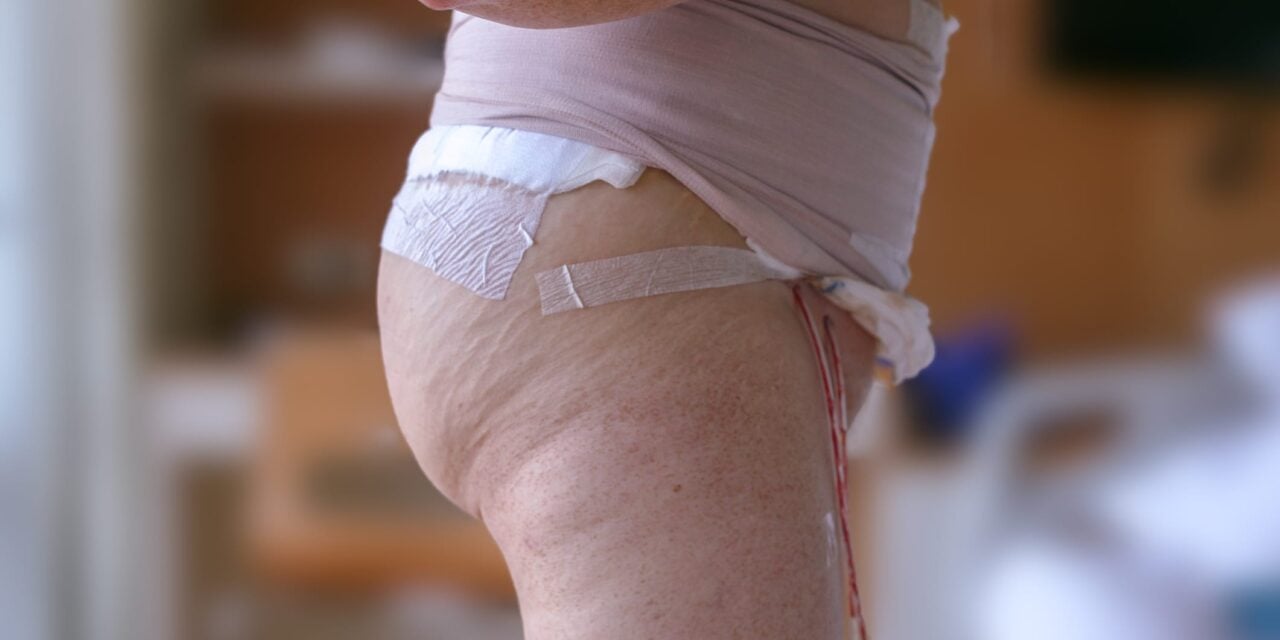
Use of GLP-1 drugs was linked to higher rates of delayed wound healing but lower rates of seroma in patients undergoing abdominal body contouring surgery.
Use of GLP-1 weight-loss medications may have mixed effects on complication risks for patients undergoing panniculectomy, according to a study published in the April issue of Plastic and Reconstructive Surgery. The journal is the official publication of the American Society of Plastic Surgeons.
Body contouring procedures, including panniculectomy, are commonly performed after significant weight loss to remove excess abdominal skin and tissue. As GLP-1 medications become more widely used for weight loss and type 2 diabetes, plastic surgeons are increasingly encountering patients who are taking these drugs before surgery.
“As GLP-1 receptor agonist [GLP1ra] medications become increasingly integrated into the care of patients undergoing body contouring, our findings suggest that these drugs may have subtle effects on wound healing, even if they don’t increase overall surgical risks,” says Zachary Andrew Koenig, MD, of West Virginia University School of Medicine, in a release.
The researchers analyzed outcomes for 373 patients who underwent panniculectomy between 2013 and 2023. Of these, 21.7% were taking GLP-1 medications prior to surgery, with use increasing in recent years. Patients undergoing bariatric or hernia procedures were excluded to better isolate the effects of GLP-1 therapy.
Differences in Characteristics and Complications for GLP-1 Users
Patients taking GLP-1 medications were more likely to have comorbidities including type 2 diabetes, hypertension, and chronic obstructive pulmonary disease, although body mass index was similar between groups.
The study found that delayed wound healing occurred more frequently in GLP-1 users (18.5%) compared to non-users (7.5%). In contrast, seroma rates were lower among patients taking GLP-1 medications (4.9% versus 14.0%). These differences remained significant after adjusting for other variables. Rates of other complications—including wound dehiscence, infection, and rehospitalization—were similar between the two groups.
The findings point to what the authors describe as a “complex and nuanced interplay” between GLP-1 use and postoperative healing. While the medications did not appear to increase overall surgical risk, they may influence specific aspects of recovery.
“Our findings suggest that while GLP1ra therapy does not appear to increase major surgical risk, it may affect specific aspects of healing that warrant proactive management,” Koenig and coauthors say in a release.
The authors note that further research is needed to better understand these effects and to inform clinical guidelines as use of GLP-1 medications continues to expand in patients seeking body contouring procedures.
ID 138545591 © Aussiecate | Dreamstime.com