
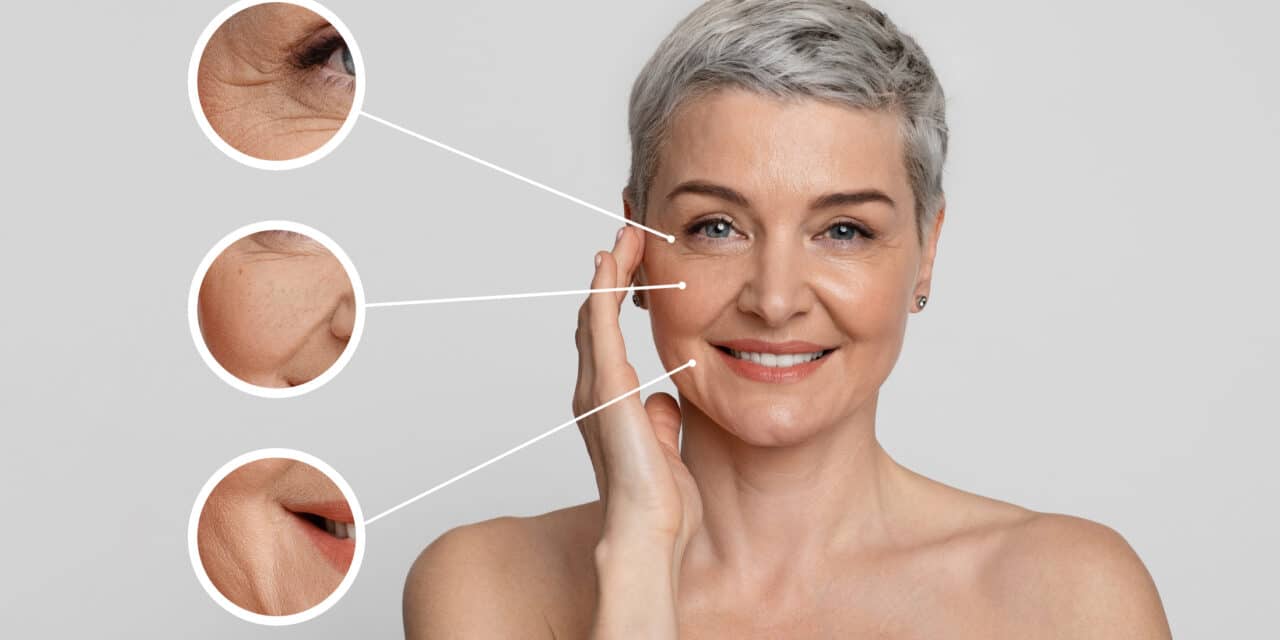
The newly launched Skin Quality Index is designed to help providers and patients better align on skin concerns, treatment priorities, and expected outcomes.
By Jessie Gainor
Aesthetic consultations often begin with a familiar disconnect. Patients describe “sun damage,” “sagging,” or “dullness,” while physicians think in terms of hyperpigmentation, laxity, elasticity, and texture. According to new research published in Dermatologic Surgery, that terminology gap may be doing more than creating conversational friction. Researchers suggest it may also complicate treatment planning, outcome assessment, and patient satisfaction.1
In response, Allergan Aesthetics has launched the Skin Quality Index (SQI), a framework intended to standardize how patients and healthcare providers discuss skin quality concerns. The initiative is backed by a multi-phase research effort that included a systematic review of more than 900 publications spanning two decades, advisory boards with global healthcare providers, patient focus groups, and surveys involving more than 1,000 patients and 200 aesthetic healthcare providers.1,2
“Skin quality is a very relevant topic when we think about today’s society and the role of filters and social media,” said Sherket Peterson, PhD, one of the researchers involved in the two Dermatologic Surgery studies, in an interview with Plastic Surgery Practice. “A lot of these tools are really aimed at improving skin quality. And when we talk about skin quality, it really is a universal concern regardless of ethnicity, race, or nationality.”
Defining Skin Quality
The research emerged from what investigators describe as a longstanding lack of consensus in aesthetic medicine around how skin quality attributes are defined and measured. The systematic literature review found substantial inconsistencies in how skin quality attributes were defined across studies, with between seven and 17 definitions used for individual attributes and no clear consensus. Subjective endpoints comprised 87% of observations reviewed.1
The companion vocabulary study sought to narrow that variability by establishing consensus terminology across four domains: visible color changes, topographical changes, hydration and sebaceous equilibrium changes, and mechanical changes.2 The resulting framework includes 15 defined skin quality attributes: roughness, visible pores, dry skin, dullness, oily skin, skin redness, skin laxity, thin skin, dyschromia, hyperpigmentation, crepey skin, elasticity, fine lines, coarse lines, and firmness.2
“The most significant insight across all three perspectives, for me, was the profound and consistent disconnect between how patients and providers really communicated around skin quality,” said Peterson, who is also director of global alliance management at AbbVie, the parent company of Allergan Aesthetics.
The Communication Gap
The gap was especially evident in discussions around laxity and hyperpigmentation. According to Peterson, patients speaking to one another often described laxity using terms such as “saggy,” while physicians used the more technical term “laxity.” But when patients and physicians communicated directly, terminology shifted again.
“We saw that when the patient communicated with the doctor, both [parties] actually used terms like ‘droopy’ or ‘saggy,’” Peterson said. “You can see how this miscommunication between laxity and saggy could really impact the outcomes a patient gets from a treatment plan.”
Hyperpigmentation revealed a similar pattern. Patients commonly referred to “sun damage,” while healthcare providers used terms such as “brown spots” or “hyperpigmentation.”
“As you know, when we talk about sun damage, the result of sun damage could be wrinkles. It could be spots,” Peterson said. “There’s really a wide range of things that we would lump into sun damage.”
The concern, researchers argue, is that vague or inconsistent terminology can obscure the patient’s actual treatment priorities. A patient describing “sun damage” may primarily be concerned about pigment irregularities, while a physician may interpret the concern more broadly to include laxity, rhytides, or texture changes. Peterson said the framework is intended to help physicians more precisely identify the aesthetic issue a patient is trying to address while giving patients clearer language to describe their concerns.
Moving From Vocabulary to Workflow
The published vocabulary paper also established consensus definitions for the 15 attributes included in the framework.2 Hyperpigmentation, for example, was defined as “excess localized pigmentation darker than the surrounding skin,” while laxity was described as skin that is “loose or saggy.” Dry skin was defined as a decrease in hydration or skin lipids associated with a disrupted skin barrier.2
For plastic surgeons, the framework may have implications beyond communication alone. Peterson suggested the terminology could be incorporated into patient intake forms and consultation workflows to help standardize how skin concerns are documented, discussed, and addressed during treatment planning.
The intent, according to the researchers, is not to replace clinical judgment but to create more reproducible language that can support clearer expectations, treatment planning, and potentially more standardized research outcomes. The literature review noted that inconsistent terminology may hinder comparative evaluation of treatment options and complicate interpretation of efficacy data across studies.1
Adoption Remains the Next Challenge
Still, Peterson acknowledged that adoption remains one of the framework’s biggest challenges. For practices considering implementation, Peterson recommended beginning with physician education, followed by integration into intake forms and consultation materials.
“I think it starts with education for both the patient and the HCP, and really understanding the Skin Quality Index as a whole,” Peterson said. “That includes understanding the benefits of the 15 consensus terms and the four domains within the framework.”
Whether the Skin Quality Index becomes widely adopted across aesthetic medicine remains to be seen. But the research reflects a broader shift in the field toward treating skin quality not simply as a marketing concept, but as a category requiring more consistent clinical language, assessment, and patient communication. PSP
Photo: ID 188379523 © Prostockstudio | Dreamstime.com
Jessie Gainor is a contributing writer for Plastic Surgery Practice.
References
- Humphrey S, McDaniel DH, Ogilvie P, et al. Assessment of Methods and Attributes Used to Characterize Skin Quality: A Systematic Literature Review. Dermatol Surg. 2026.
- Humphrey S, Jones D, Yong A, et al. Establishing a Vocabulary for Skin Quality: Working Toward Consensus Skin Attribute Definitions From the Patient and Physician Perspective. Dermatol Surg. 2026.