
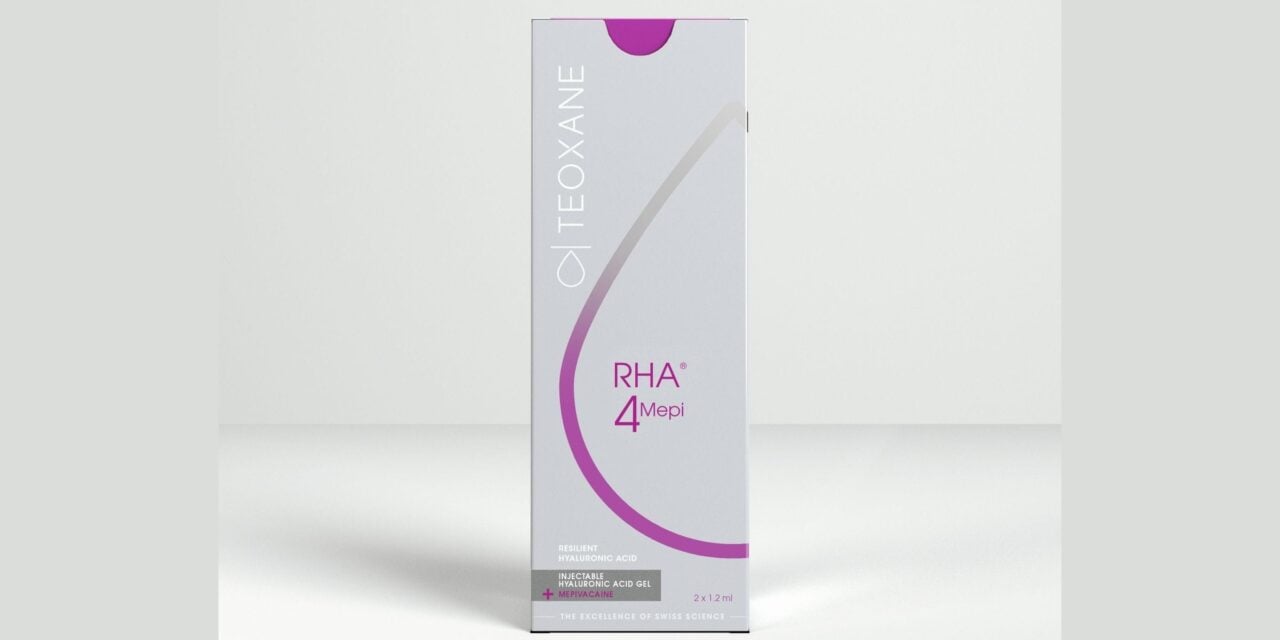
The approval covers cheek augmentation and age-related midface contour deficiencies, supported by phase III clinical trial data.
Revance and Teoxane announced the US Food and Drug Administration approval of RHA Dynamic Volume from the Teoxane RHA Collection for cheek augmentation and/or the correction of age-related midface contour deficiencies in adults aged 22 years or older.
Formerly known as RHA 4 Mepi, the product will formally launch under its new name, RHA Dynamic Volume, in Q1 2026.
“The new midface indication enables us to meet more patient needs than ever before,” says Nadeem Moiz, CEO of Revance, in a release. “Revance remains committed to innovating and providing diverse treatment options to address a variety of patient concerns.”
This approval is supported by results from the 52-week phase III clinical trial program where the efficacy and safety of RHA Dynamic Volume was evaluated in a prospective, randomized, between-subjects, double-blinded, multicenter head-to-head study with Juvéderm Voluma XC, in patients with moderate to severe midface volume deficiency. Results found that RHA Dynamic Volume demonstrated comparable effectiveness to Voluma, with patients treated with RHA Dynamic Volume requiring fewer treatment sessions and touch-ups to achieve similar outcomes.
Patients reported improved satisfaction with cheek attractiveness, youthfulness, smoothness, contour, and symmetry, and over 94% of participants reported natural-looking and feeling results at rest and in motion up to one year post-treatment. Patients also reported no perception of restricted facial movement.
Addressing Midface Volume Loss
During the clinical trial program, 75% of subjects were treated in both superficial fat and deep fat to achieve balanced volume restoration, utilizing a contemporary treatment approach that aims to optimize outcomes by addressing midface volume loss comprehensively with efficient use of product. RHA Dynamic Volume exhibited a favorable safety profile with no late-onset or serious treatment-related adverse events (TRAEs), and no TRAEs deemed to be a granuloma or delayed inflammatory response.
“This study marks the US introduction of a midface contouring approach that has been supported by more than a decade of post-marketing surveillance in Europe,” says Sandra Chennoufi, chief scientific officer of Teoxane, in a release. “Leveraging the versatility of RHA Dynamic Volume and the Teoxane MLT Multilayering Technique, physicians can now address midface volume deficiencies by targeting multiple tissue depths for deep and superficial fat pads.”
The Teoxane MLT Multilayering Technique is a tailored injection approach designed for midface volume restoration using a single, adaptable gel. This technique involves strategically placing RHA Dynamic Volume into the subcutaneous and supraperiosteal layers to restore volume, redefine contours, and harmonize facial proportions according to each patient’s anatomy and aging pattern.
“The approval of RHA Dynamic Volume for midface is an exciting advancement for the entire industry,” says double board-certified facial plastic surgeon and clinical assistant professor at the University of Illinois Steven Dayan, MD, FACS, in a release. “The results we discovered during the study were incredibly profound, and I’m excited to be able to offer a tailored treatment option for my patients.”
Photo caption: RHA Dynamic Volume
Photo credit: Revance