

Brian Pilcher, PhD, discusses Conexeu’s CXU platform and what 3D-printed extracellular matrix technology could mean for future reconstructive and aesthetic surgery.
Advances in regenerative medicine are beginning to move beyond wound repair and volumization toward patient-specific tissue reconstruction. Conexeu Sciences recently reported a milestone in this shift with the successful 3D printing of functional extracellular matrix structures using its collagen-based CXU platform. The company says the technology is designed to behave like native tissue, supporting cellular integration and vascularization rather than acting as an inert filler or scaffold. While still investigational, the approach raises questions for plastic surgeons about how bioprinted ECM could eventually fit into reconstructive and aesthetic practice, from soft-tissue defects to implant revision and scar management.
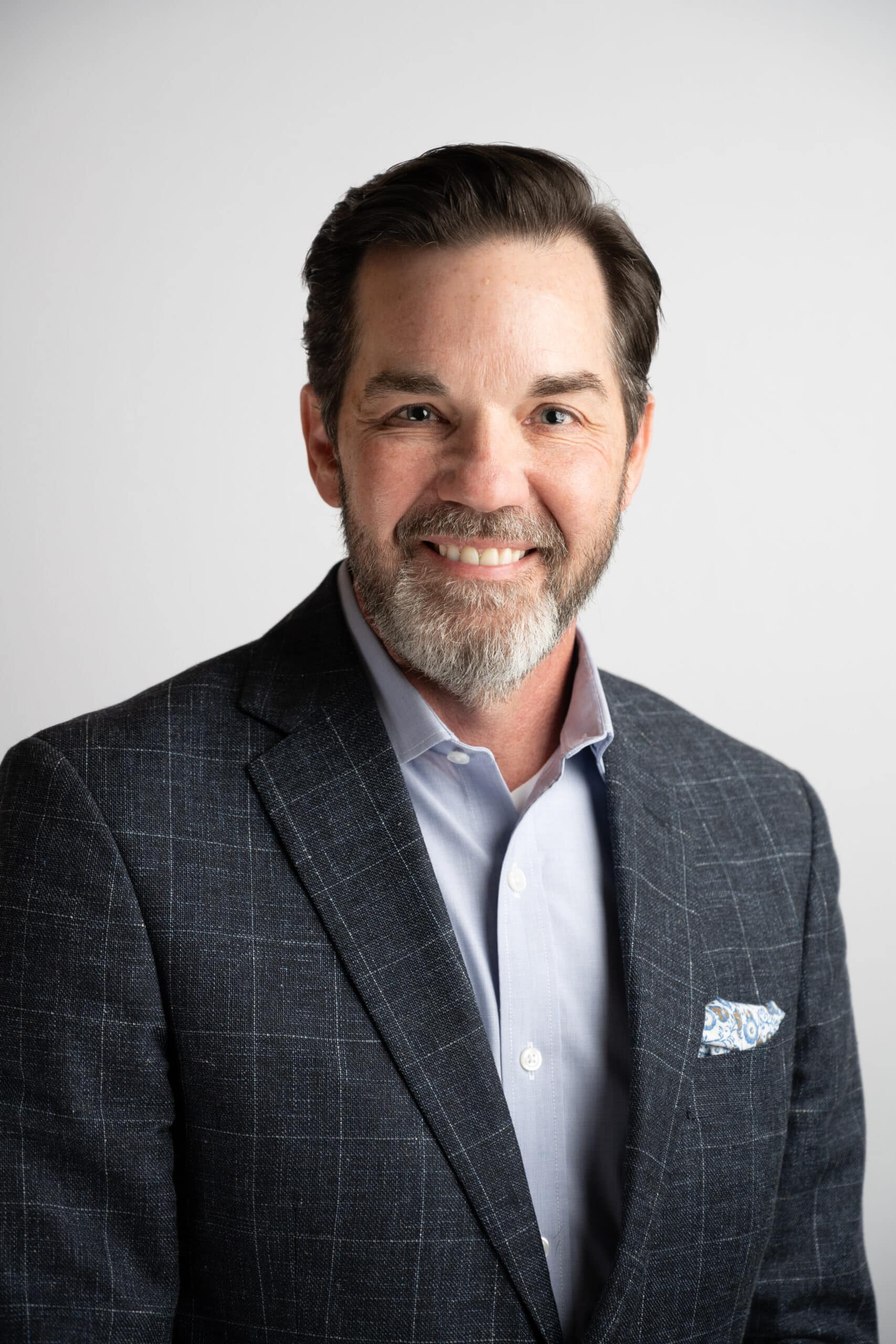
To explore what this emerging technology could mean clinically, Plastic Surgery Practice spoke with Brian Pilcher, PhD, chief medical officer at Conexeu Sciences and a veteran of dermatology and aesthetic medicine. Pilcher has more than 25 years of experience spanning academic research, medical affairs leadership, and the launch of regenerative and injectable technologies in aesthetics.
Plastic Surgery Practice: How does the CXU platform differ from the collagen-based and synthetic materials plastic surgeons are already familiar with?
Brian Pilcher, PhD: CXU is fundamentally different because it is a true extracellular matrix platform, not just collagen and not a synthetic filler or scaffold. It mimics the composition, biomechanics, and biological cues of native human connective tissue.
Where typical collagen gels lack structural integrity and synthetic polymers trigger inflammation, in pre-clinical research, CXU has been shown to provide a biomimetic, low-inflammatory, cell-welcoming environment. Studies show in-growth of the resident cells, remodeling, and vascularization rather than simply occupying space.
It is our vision that surgeons won’t implant an inert material; with CXU they’ll potentially be implanting a template tailored to the patient’s defect for the body to regenerate its own tissue.
PSP: Down the road, what types of reconstructive or aesthetic procedures do you see as candidates for applying this 3D-printed ECM technology?
Pilcher: While CXU is still an investigational device, Conexeu envisions the first wave of applications to focus on soft-tissue voids that require structural restoration rather than volumization alone, including:
- Contour deformities following trauma or tumor resection
- Revision of implant-based breast reconstruction (rippling, upper pole deficits)
- Facial soft-tissue reconstruction and asymmetry
- Periorbital and perioral support
- Scar remodeling and dermal replacements
These are areas where current dermal fillers, fat grafts, and collagen only matrices fall short; they either resorb too quickly or fail to integrate successfully into the host tissue. In our preclinical studies, CXU has demonstrated a “tissue agnostic” behavior in that it supports ingrowth/regeneration of the native tissue into which it is placed. CXU’s printed constructs can be tailored to shape and mechanical needs, giving surgeons unprecedented control.
PSP: Can you explain what “tissue on demand” looks like in a clinical context? How close are we to printing patient-specific grafts for surgical use?
Pilcher: “Tissue on demand” means that a surgeon could possibly access custom-shaped, tissue grafts tailored specifically for that patient. Moreover, the physician could possibly have access to these structures when they need them, without donor-site morbidity, supply limitations, or waiting for allografts.
In practice, it means printing a graft that matches a CT/MRI-derived defect from a specific patient, with the right geometry and structure to integrate naturally.
We’ve recently demonstrated the ability to 3D print human-like ECM structures with the CXU platform, which is the key technological milestone. Patient-specific grafts are no longer theoretical, they’re in development.
PSP: What evidence do you have so far to support CXU’s performance in terms of integration, vascularization, and healing?
Pilcher: Conexeu has conducted several pre-clinical studies investigating its role in wound repair and implantation in non-wounded tissues to better understand how it integrates biologically into the host tissue. Across multiple in-vivo and ex-vivo studies, we consistently observe:
- Rapid cellular infiltration and early vascular ingrowth.
- Low inflammatory response compared to commercial collagen and synthetic scaffolds.
- Stable architecture with gradual, natural remodeling.
- Formation of functional tissue, not fibrosis or foreign-body response.
- Minimal shrinkage or collapse during healing.
- Histologic evaluation has demonstrated true extracellular matrix organization.
This pre-clinical evidence positions CXU as one of the few biomaterials capable of supporting real tissue regeneration, not just temporary augmentation.
PSP: What are the key considerations or limitations that plastic surgeons should understand when evaluating this material for future use?
Pilcher: CXU is fundamentally different from traditional fillers or passive matrices, and surgeons should approach it as a regenerative material rather than a volumizer. Its thermosensitive behavior allows precise placement but also requires familiarity with handling times as the material rapidly (~10min) transitions from liquid to gel at body temperature.
Because CXU actively integrates, remodels, and recruits host cells, outcomes depend on the biology of the recipient site. Well-vascularized soft tissue defects are ideal; irradiated, contaminated, or highly avascular environments may require staged approaches or adjunctive reconstruction.
In short, CXU offers transformative regenerative potential, but surgeons should understand that its behavior, and its benefits, reflect a biological healing process, not a permanent implant.
PSP: CXU , also called Ten Minute Tissue is the company’s first clinical product. What is its current regulatory status and when might surgeons expect to see it on the market?
Pilcher: Ten Minute Tissue is currently progressing through the 510(k) regulatory pathway required for a U.S. FDA Class II device; it is not currently cleared for commercialization. Our expectation is for 510(k) submission prior to the end of 2026.
PSP: From a workflow perspective, how might this platform fit into a typical private practice or operating room environment? Will it require new equipment or training?
Pilcher: For 3D-printed constructs, printing and manufacturing will occur at a centralized facility initially, where the surgeon will send the CT/MRI of the patient’s defect. A 3D bioprint of the scanned defect would deliver a ready-to-use sterile graft/implant.
In the long term, surgical centers may adopt point-of-care printing, but early clinical adoption will not require new hardware or major workflow changes.
Conexeu’s Ten Minute Tissue (CXU), as an injectable, is contemplated for use in body contouring, to complement the placement of larger tissue structures for better aesthetic outcomes. As an injectable, it requires no new equipment. It is anticipated to be provided in lyophilized powder form, ready for immediate reconstitution bedside or in the treatment room. Characteristics of the material once rehydrated is as a liquid at room temperature, self-crosslinking to a gel at ~37°C in ~10 minutes. The ECM can be injected easily through a 26G needle. It is being designed to integrate seamlessly into existing practice workflows. Handling is intuitive for any surgeon familiar with biologics or fat grafting.
Training will focus on understanding regenerative healing principles, placement techniques, and volumetric planning, not on operating a printer.
PSP: Now that the company has achieved this printing milestone, what are the next steps in development or commercialization? What should the surgical community watch for next?
Pilcher: Three major milestones are on the horizon:
- Translational pre-clinical animal data demonstrating vascularized, functional tissue from printed CXU constructs.
- Regulatory submissions and clearances for Ten Minute Tissue and eventual patient-specific grafts.
- Clinical collaborations with key surgeons to validate performance in real-world scenarios.
Surgeons should watch for increasing evidence of how a printed ECM changes the paradigm from augmentation to actual regeneration. This is not just an incremental improvement, but rather the beginning of personalized, tissue regeneration. PSP
Opening image: ID 154742495 © Pop Nukoonrat | Dreamstime.com. Headshot courtesy of Conexeu Sciences.