
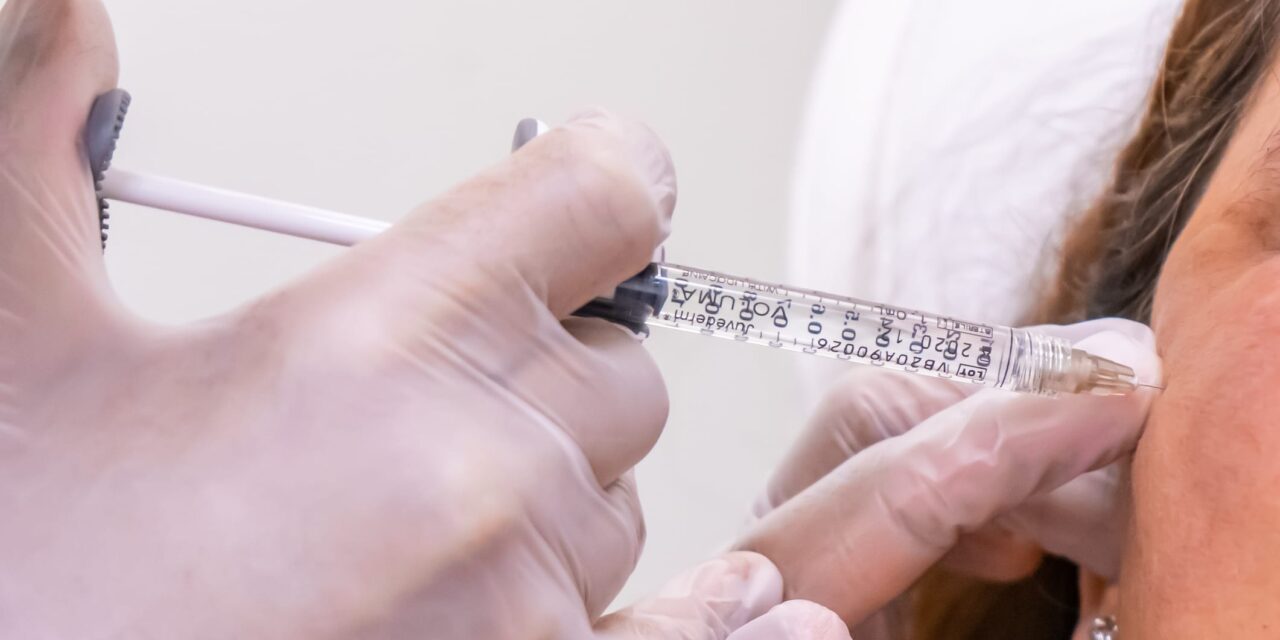
Phase 4 studies found improvements in patient-reported facial appearance following hyaluronic acid filler treatment alone or in combination with neurotoxin and skincare.
Allergan Aesthetics, an AbbVie company, announced results from two Phase 4 studies of aesthetic treatment in adults taking glucagon-like peptide-1 (GLP-1) medications. Participants reported improved satisfaction with their facial appearance after treatment in both studies, HARMONY in DIVERSITY and HALO.
The data were presented at the 2026 American Society for Dermatologic Surgery annual meeting, held Nov 5-8 in San Diego.
People taking GLP-1 medications for weight loss may experience facial changes, including loss of facial volume and changes in skin quality. Both studies were prospective, multicenter, open-label, single-arm trials in adults on stable doses of GLP-1 medications.
“Patients on GLP-1 medications are navigating real changes in how their face looks, and those changes can affect their self-image and how they engage with others,” says Joely Kaufman-Janette, MD, a board-certified dermatologist at Skin Research Institute and study investigator, in a release. “Having data specific to this population gives us a clearer starting point for setting expectations and building a treatment plan that reflects what they’re experiencing.”
Combined Neurotoxin and Filler Results
HARMONY in DIVERSITY is the first study to evaluate a neurotoxin combined with hyaluronic acid injectables in adults on GLP-1 medications. The study enrolled 130 adults at 10 US sites. Its second cohort included 30 adults who received hyaluronic acid injectables, onabotulinumtoxinA, and a study-specified skincare regimen.
In that cohort, mean FACE-Q Satisfaction With Facial Appearance scores improved by a statistically significant 42.4 points from before treatment to 30 days after onabotulinumtoxinA treatment. Participants also had statistically significant improvements in skin quality, psychological function, and social function.
Most treatment-related treatment-emergent adverse events were mild, nonserious, and resolved without intervention, and there was no evidence of distant spread of toxin.
The study’s first cohort included 100 participants ages 22-65 across Fitzpatrick skin types I-VI who received multimodal treatment of the face and neck. That group had a statistically significant 42.0-point mean improvement in FACE-Q Satisfaction With Facial Appearance, along with significant improvements in psychological and social function.
Interim Data on Hyaluronic Acid Injectables
HALO evaluates hyaluronic acid injectables across the face in adults on stable doses of GLP-1 medications. Results presented at the meeting come from an interim analysis of 25 of the 75 participants treated.
In that analysis, participants had a 39.6-point mean improvement in FACE-Q Satisfaction With Facial Appearance from before treatment to month 3. Other findings included:
- 95.7% of participants were satisfied or very satisfied that they still looked like themselves.
- 82.6% were satisfied or very satisfied with how natural they looked.
- 88% were satisfied with how natural their skin looks, as measured by an item on the SKIN-Q Looks scale.
Most treatment-related adverse events reported at the time of the interim analysis were mild and nonserious.
Both studies used validated patient questionnaires, including FACE-Q and SKIN-Q, with scores ranging from 0 to 100 and higher scores indicating better outcomes.
“Our research is designed around the patients we serve, and that includes people taking GLP-1 medications for weight management,” says Darin Messina, PhD, senior vice president and head of aesthetics research and development at AbbVie, in a release. “The breadth of the Allergan Aesthetics portfolio lets us study our products in combination to generate evidence that helps providers make informed decisions about their potential use together in practice.”
Other Presentations at the Meeting
Allergan Aesthetics’ scientific program also covered several other areas:
- Neurotoxin: An exploratory digital image analysis from a Phase 1 study showed similar assessments of glabellar line severity and line detection after treatment with investigational trenibotulinumtoxinE and onabotulinumtoxinA. The data were presented in the Cosmetic Oral Abstract Presentations: Top Ten session.
- Skincare: Four studies evaluated a topical cosmetic serum containing exosomes derived from human fibroblasts. In a 12-week study of 36 premenopausal and postmenopausal women, the serum significantly improved skin tone evenness and smoothness by week 1 and lower facial sagging by week 8.
- Body contouring: One presentation examined how treatment sequence may influence outcomes and patient experience when combining cryolipolysis and electromagnetic muscle stimulation for abdominal body contouring.
ID 162896680 © Joycegraceweb | Dreamstime.com