
Dutch researchers report 90% of patients regained clitoral orgasm following a reconstructive procedure that repositions nerve bundles and uses a buccal mucosa graft.
Researchers at Radboudumc in the Netherlands have developed a reconstructive surgical technique that restores the clitoris in women who lose part of it during vulvar cancer treatment, with initial results showing that 90% of the first 23 patients were able to achieve a clitoral orgasm following surgery.
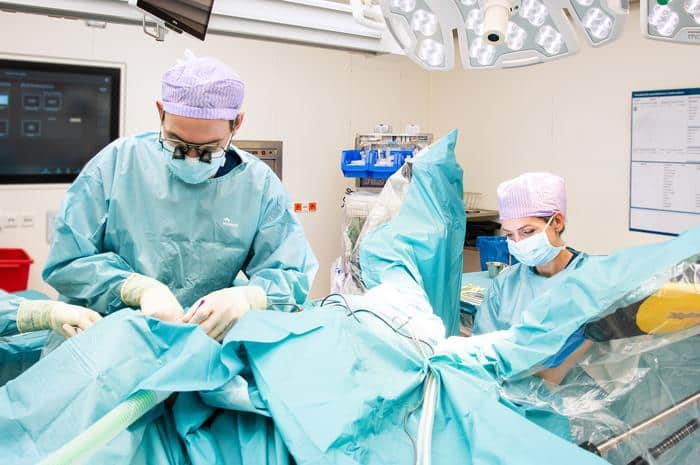
The procedure, developed by plastic surgeon Tim Nijhuis, MD, PhD, and gynecologic oncologist Mieke ten Eikelder marks the first dedicated clitoral reconstruction method for vulvar cancer patients and arrives nearly four decades after the first penile reconstruction surgery was performed in 1987.
Surgery for vulvar cancer can preserve life but often compromises sexual function when the tumor is located in or near the clitoris. “When the tumor is located in or around the clitoris, we sometimes have to remove part of it,” says ten Eikelder in a release. “Until now, the wound was simply closed afterward, and the clitoris disappeared beneath a layer of skin, with little attention paid to quality of life or whether orgasm would still be possible.”
Once the tumor has been removed, the nerve bundles are released and repositioned to create a new clitoral tip. “We then cover it with a small graft of buccal mucosa. This tissue type closely resembles the tissue found around the vulva,” says Nijhuis in a release.
The approach is designed to preserve clitoral sensation and adds approximately 15 minutes to the overall operation.
Clinical Outcomes
Among the first 23 patients who underwent the procedure, return of clitoral orgasm typically occurred between three and six months after surgery. “Initially, the clitoris may be overly sensitive or, conversely, less sensitive. However, recovery is generally optimal after one year. In most women, sensation returns to a level comparable to what it was before surgery,” says ten Eikelder in a release.
Results from the first 18 patients have been published in Gynecologic Oncology.
Approximately 450 women in the Netherlands are diagnosed with vulvar cancer each year, with the clitoris or surrounding area involved in roughly one-quarter of cases. Beyond oncologic reconstruction, the researchers note that the technique may also benefit women who have experienced genital mutilation.
National Rollout and Training
The procedure is being introduced across the Netherlands as part of a scientific research program. Eight additional Dutch hospitals that treat vulvar cancer are participating in a follow-up project to train gynecologic oncologists and plastic surgeons in the new technique. Nijhuis and ten Eikelder are also training specialists from other countries.
With financial support from the Dutch Cancer Society, the research team will collaborate with other Dutch hospitals to further evaluate whether the reconstruction improves sexual function and quality of life, and to determine how the technique can be safely integrated into routine clinical practice.
Photo caption: Plastic surgeon Tim Nijhuis and gynaecologic oncologist Mieke ten Eikelder from Radboudumc performing a reconstruction of the clitoris
Photo credit: Radboudumc, Stephan van Raaij