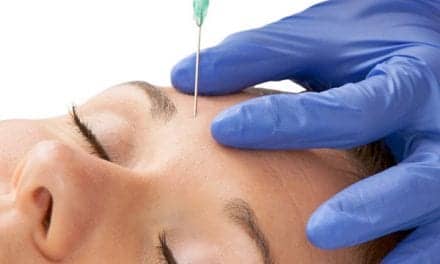

Emily Hu, MD, shares insights from a recent report on HA injectables, examining patient perceptions, persistent myths, and clinical realities.
Misinformation surrounding hyaluronic acid (HA) injectable fillers—particularly on social media—continues to shape patient perceptions and influence consultation dynamics in aesthetic practices. Concerns about “overdone” results and filler migration persist despite high reported patient satisfaction, contributing to gaps between clinical reality and public narrative. In response, Allergan Aesthetics released its “Hyaluronic Acid Injectable Fillers Report” last fall examining how misinformation spreads, how patients define treatment success, and where education can support more informed decision-making in the clinical setting.
In an interview with Plastic Surgery Practice, Emily Hu, MD, a board-certified plastic surgeon at Artista Surgery and Aesthetics in Tualatin, Ore, discusses the report’s findings and their implications for private practice. She outlines how misinformation affects patient trust, how preferences are shifting toward more natural-looking outcomes, and how plastic surgeons can use data-driven resources to guide consultations, support injector training, and improve communication with patients.
Plastic Surgery Practice: What trends in patient behavior and misinformation prompted Allergan Aesthetics to commission and publish this HA fillers report in 2025?
Emily Hu, MD: We’re seeing a disconnect between the reality of patient outcomes and the narrative often portrayed on social media. One of the most persistent myths I hear, often fueled by social media, is the fear of filler migration and the idea that HA fillers lead to disproportionate, “overdone” results. It’s ironic, because 97% of patients report that they are highly satisfied following HA treatment. Possibly, it is because many patients may not have “obvious” appearing results and/or are not as vocal about their satisfaction and treatment, compared to those who are dissatisfied, or who have treatment results that are “obvious” to others. These trends prompted Allergan Aesthetics to proactively lead the conversation based on facts, educate patients, empower my fellow healthcare providers with data, and shift the overall narrative about the safety and efficacy of HA fillers—and that is how the “The Aesthetics Evolution: The Hyaluronic Acid Injectable Fillers Report” came to life.
PSP: From a market-leadership perspective, where is misinformation doing the most damage—to patient trust, clinical outcomes, or treatment decision-making?
Hu: Misinformation erodes the foundation of our practice: patient trust. When patients are fearful, it creates a barrier to the open, honest consultation that is essential for good clinical decision-making and optimal outcomes.
A big contributor to misinformation is social media, with clickbait content and algorithms pushing videos of dramatic, overdone results. Social media algorithms often amplify dramatic, negative content, which fuels a misleading narrative. For instance, the report highlights that just 1% of the 2.7 million digital conversations around dermal fillers specifically discuss HA injectables, meaning they are often unfairly grouped with other procedures and products.
PSP: How does the report reflect changes in how patients define success today, particularly around natural-looking outcomes?
Hu: The report powerfully reinforces that we are in an era where more patients vocally eschew “obvious” results and prefer undetectable results. The data is clear: 78% of consumers desire a “natural” look.
This is a shift away from focusing on pure augmentation and more towards thoughtful rejuvenation and soft enhancement. Hyaluronic acid fillers that can act as struts and support the overlying tissue are uniquely suited to meet this demand.
PSP: What does the data suggest about the role of injector technique and education versus product selection in achieving consistent results?
Hu: The insights and findings in the report highlight the importance of working with skilled providers and physicians who understand facial balance, proportions, and how to use HA to create a harmonious, refreshed appearance. I think it’s important to keep in mind that we are doing a holistic assessment of our patient, rather than targeting specific areas.
When it comes to product selection, dosing and treatment areas, I emphasize customization. There are different kinds of HA injectable fillers, each designed with different formulations for specific facial areas. Because HA is a substance naturally found in the skin, and today’s products have such advanced formulations, we can customize treatments to restore volume and smooth skin in a way that is subtle and blends seamlessly with a patient’s unique features, often appearing “undetectable.”
PSP: How should plastic surgeons use this report as a clinical and communication tool in consultation—not marketing, but education?
Hu: Nowadays, many plastic surgeons, like me, choose to also be masterful injectors for their own patients. By using our practical and years-long experience with anatomy and our depth of knowledge regarding the interplay of epidermis, dermis, subcutaneous tissue, muscle, and bone, these plastic surgeons often enjoy providing nonsurgical enhancement as a natural adjunct to the surgical services we provide to help our patients look and feel more confident overall. In addition, many plastic surgeons also choose to have a dedicated Med-Spa and hire extended providers, such as Physician Assistants or Nurse Practitioners, to provide injectable services. This report is excellent for training anyone in our offices who are providing HA injectable care, as it provides data not only about the safety of HA treatments, but also about the efficacy and satisfaction of millions of patients!
The Hyaluronic Acid Injectable Fillers Report is an invaluable educational tool that supports the dialogue between providers and our patients. It allows us to validate patient perspectives with science-backed findings on safety and high satisfaction rates to build confidence and empowers us to proactively address any fears or misinformation that a patient may encounter online.
By leveraging this report as a neutral, third-party resource, we can demystify the treatment and set clear expectations, ultimately shifting the dynamic to one where we co-create a customized, long-term plan grounded in facts and mutual trust. PSP
Photo: ID 190929609 © Viacheslav Iacobchuk | Dreamstime.com