
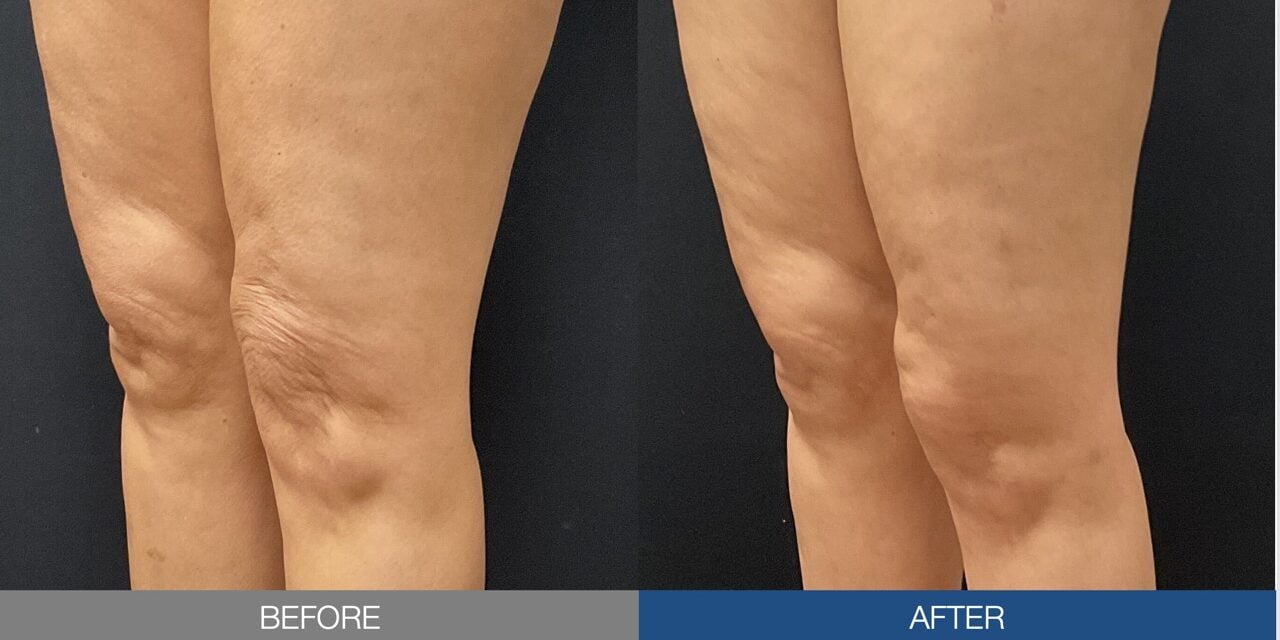
A multicenter, blinded study adds clinical evidence for ultrasound as a noninvasive approach to improving cellulite and skin laxity.
By Jessie Gainor
Cellulite remains one of the most common—and historically frustrating—aesthetic concerns for both patients and clinicians. Affecting more than 90% of women, the condition has proven resistant to consistent, predictable treatment outcomes, particularly with noninvasive approaches. New peer-reviewed research, however, is adding clinical weight to ultrasound-based technology as a potential tool for addressing both cellulite and associated skin laxity.
A 2025 prospective, multicenter study published in the Journal of Cosmetic Dermatology evaluated the use of Sofwave, an FDA-cleared ultrasound device, for the treatment of cellulite on the thighs and buttocks. Conducted across five independent U.S. research centers, the study enrolled 60 female patients who underwent two treatment sessions. Outcomes were assessed at three months by blinded, independent physicians.
According to the study results, 91% of patients demonstrated visible improvement in cellulite appearance. Treatments were reported to be well tolerated, with minimal downtime.
Michael Gold, MD, a board-certified dermatologist and clinical researcher in Nashville, Tenn, served as an investigator in the trial. He notes that cellulite has long posed a challenge due to the limitations of previous technologies. “Many treatment modalities have come and gone mainly because the clinical results are not overly impressive,” Gold says. “What we found in this study was that with this unique delivery of ultrasound, we are able to target the septum associated with cellulite, and the resulting collagen and elastin remodeling was truly impressive in alleviating many of the dimples.”
The study’s use of blinded physician evaluators is particularly notable, Gold adds. “Having a blinded assessor adds another level of believability,” he says. “They are not present during treatment, so their assessments help make the results more real.”
Sofwave delivers ultrasound energy through seven parallel beams at a depth of 1.5 mm in the mid-dermis, stimulating a healing response associated with collagen regeneration. Unlike subcision, injectable treatments, or radiofrequency-based approaches, ultrasound does not rely on needles or aggressive thermal injury. In Gold’s experience, this translates to reduced discomfort and faster recovery. “There is for sure less pain and downtime than some of the other treatments,” he says.
The protocol used in the trial—two treatment sessions—also aligns with current practice realities. While Gold cautions that maintenance may still be required over time, he sees value in the limited treatment burden. “One-and-done doesn’t really exist in aesthetics,” he says, “but with two sessions we saw a pretty impressive clinical outcome.”
For surgeons who currently rely on invasive cellulite treatments, Gold views ultrasound as a potential first-line option. “Ultrasound may remove the need for surgery,” he says, “but at the very least, it should be done prior to surgery in most cases.”
Because collagen remodeling develops gradually, patient counseling remains critical. Gold advises starting treatment earlier in the year for those seeking visible improvement by summer, noting that results continue to evolve over approximately 12 weeks.
As clinical evidence continues to accumulate, ultrasound-based approaches may begin to occupy a more defined role in the cellulite treatment landscape—particularly for patients seeking noninvasive options with minimal downtime and physician-validated outcomes. PSP
Photo courtesy of Michael Gold, MD.
Jessie Gainor is a contributing writer for Plastic Surgery Practice.