
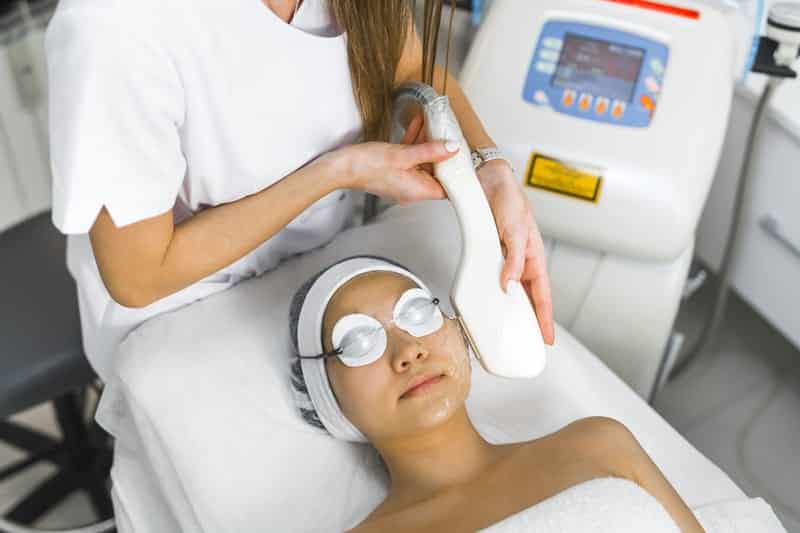
The new standards provide treatment recommendations for 26 common conditions for practitioners treating Asian skin types.
The Chinese Journal of Plastic and Reconstructive Surgery has published the first clinical guidelines for laser and aesthetic medicine in China. Developed by the Chinese Society of Plastic Surgery of the Chinese Medical Association and the Chinese Society of Laser and Aesthetic Medicine of the Chinese Association of Plastics and Aesthetics, the document provides evidence-based recommendations for 26 conditions, ranging from pigmentary disorders to skin rejuvenation.
The guideline addresses a lack of systematic clinical standards in a field that has seen rapid growth over 30 years. To develop the recommendations, a scientific committee and 26 working groups reviewed international literature. The resulting document is registered on the International Practice Guidelines Registry and Transparency Platform.
“This is the first comprehensive guideline in China dedicated to standardizing the clinical practice of laser and aesthetic medicine,” says Xiaoxi Lin, a professor from Shanghai Ninth People’s Hospital, in a release.
Recommendations for Pigmentary Disorders and Tattoos
For melasma, the guideline emphasizes that photoelectric technology is generally not recommended as a first-line treatment. Practitioners should avoid high-energy treatments for active-phase melasma to prevent rebound, while the low-fluence, large-spot Q-switched Nd:YAG laser is the preferred modality for the stable phase.
In the treatment of dermal spots, nanosecond and picosecond lasers are the primary options. The 755 nm picosecond laser is noted for its efficacy in Hori’s nevus, while Q-switched lasers remain effective for Nevus of Ota, particularly in pediatric patients where early intervention is suggested.
For tattoo removal, picosecond lasers are recommended as the first-line treatment because they offer superior clearance rates and require fewer sessions than traditional Q-switched lasers.
Managing Scars, Aging, and Vascular Lesions
The guideline discourages monotherapy for keloids due to high recurrence rates. Instead, it suggests multimodal therapy, such as combining fractional CO2 lasers with intralesional injections or radiotherapy. For facial wrinkles, laxity, and vascular malformations like Port-Wine Stains, the guideline outlines specific parameters for ablative and non-ablative lasers, as well as pulsed dye lasers.
By grading the quality of evidence, the guideline aims to lead clinicians toward evidence-based medicine to maximize efficacy while minimizing adverse reactions, such as post-inflammatory hyperpigmentation. The document serves as a reference for clinical physicians, nursing staff, and researchers, providing clinical data for practitioners treating Asian skin types.
ID 265431571 © Poppypixstock | Dreamstime.com