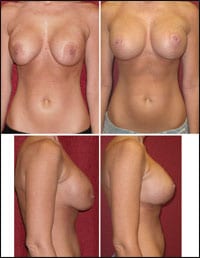
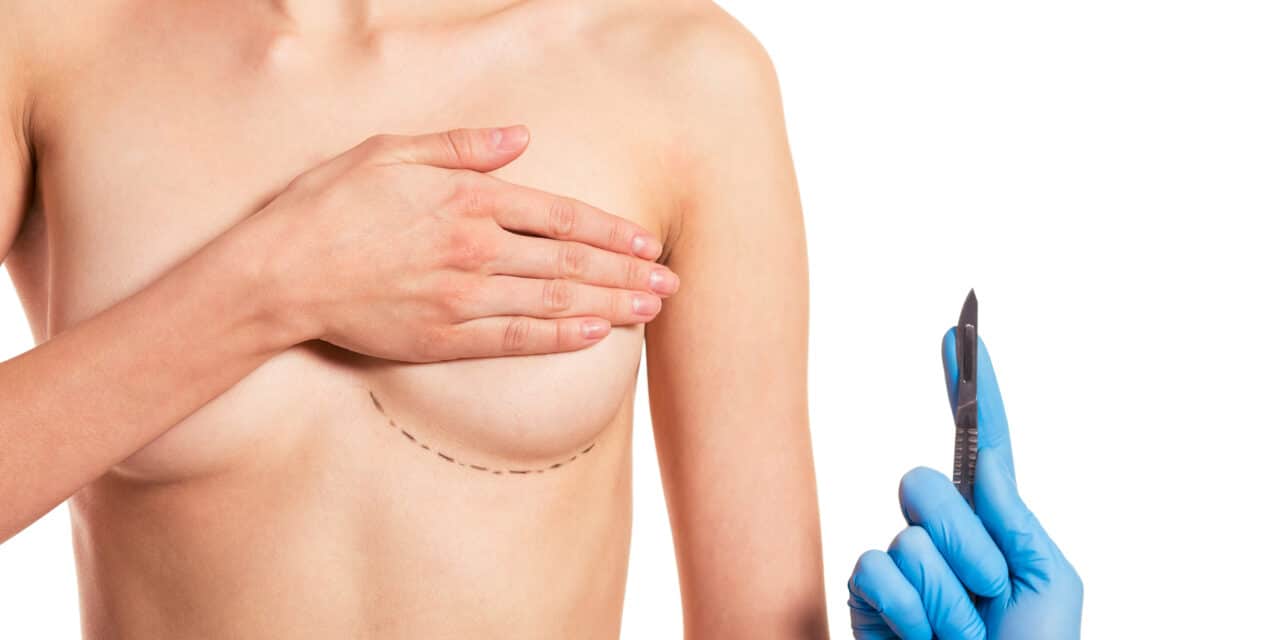
Plastic surgeons Rozbeh Torabi, MD, and Radbeh Torabi, MD, discuss how long-term breast augmentation can affect explantation planning, breast reshaping, and postoperative outcomes.
For patients seeking breast implant removal after years of augmentation, explantation is not simply a matter of removing the device and returning the breast to its pre-augmentation state. Larger, long-standing implants can affect the skin envelope, soft tissue, breast volume and projection, implant pocket, and inframammary fold, influencing both surgical planning and postoperative breast shape.
For plastic surgeons, the anatomy that will remain after implant removal is central to determining whether explantation alone is appropriate or whether mastopexy, tissue reshaping, fat grafting, or a staged approach should be considered. Tissue thinning, pocket enlargement, fold distortion, capsular contracture, and malposition can further complicate these cases.
Plastic Surgery Practice spoke with Rozbeh Torabi, MD, a double board-certified plastic surgeon, and Radbeh Torabi, MD, a board-certified plastic surgeon, both with Elite Plastic Surgery in Chandler, Arizona, about evaluating long-term augmentation patients, planning explantation, and achieving more predictable outcomes.

PSP: When a patient with larger, long-term breast implants presents for explantation, what are you evaluating that will influence your surgical plan?
Rozbeh Torabi, MD: The evaluation begins with understanding how the implant has altered the breast over time. We assess the dimensions and position of the implant, the quality and thickness of the soft-tissue envelope, skin elasticity, nipple position, inframammary fold stability, implant-pocket anatomy, and the presence of capsular contracture or malposition. Just as importantly, we assess the quantity and distribution of native breast tissue that will remain after explantation.
In long-standing augmentation, particularly with larger implants, the implant has often functioned as a structural component of the breast for many years. Once that volume is removed, pre-existing tissue attenuation, skin expansion, and changes in breast architecture become much more apparent. Our surgical plan is therefore based less on the implant being removed and more on the anatomy we anticipate will remain.
PSP: How do you assess skin elasticity, tissue quality, ptosis, and remaining breast volume when determining whether explantation alone is appropriate?
Radbeh Torabi, MD: The critical distinction is between an expanded breast envelope that retains meaningful recoil and one that has undergone more permanent structural attenuation. We evaluate skin redundancy and elasticity, parenchymal thickness, nipple position relative to the inframammary fold, glandular distribution, and the degree to which the breast tissue has descended or become thinned over the implant.
Explantation alone can be an elegant solution in a well-selected patient with favorable skin quality, adequate native breast volume, and limited ptosis. Conversely, when the implant has substantially expanded the skin envelope or the remaining breast tissue is thin and poorly supported, simple removal may result in significant deflation, ptosis, or loss of projection. In those patients, some form of envelope reduction or parenchymal reshaping may be necessary to restore proportion.
PSP: How do implant size and duration of implantation affect the anatomy you encounter and the options available for reshaping the breast afterward?
Rozbeh Torabi, MD: Implant size and duration are important because the breast is a dynamic biological envelope. A larger implant places greater and more prolonged mechanical stress on the skin, breast parenchyma, supporting ligaments, and inframammary fold. Over time, we may see tissue thinning, glandular redistribution, fold descent, pocket expansion, and varying degrees of capsular change.
That said, there is no simple formula based on implant size or years since augmentation. Two patients with similar implants and surgical histories can present with remarkably different anatomy. Genetics, pregnancy, weight fluctuation, aging, tissue quality, and previous operations all influence the final presentation. For that reason, the current anatomy, not simply the history of the implant, should ultimately dictate the reconstructive strategy.
PSP: When do you recommend combining explantation with mastopexy or other tissue reshaping?
Radbeh Torabi, MD: We consider mastopexy when the anticipated post-explant breast has an unfavorable relationship between the skin envelope and the volume of remaining breast tissue, particularly when there is significant skin excess, nipple descent, loss of projection, or distortion of the breast footprint.
The objective is not simply to remove excess skin. A well-planned mastopexy allows us to reposition the nipple-areolar complex, re-establish the breast envelope, and redistribute the patient’s own tissue to improve shape and projection.
In selected patients, internal parenchymal rearrangement or auto-augmentation can use existing lower-pole tissue to restore central or upper-pole projection. Fat grafting can also be valuable for correcting localized deficiencies or improving contour. The appropriate technique depends on what anatomical elements are deficient once the implant volume is removed.
PSP: How do varying degrees of soft-tissue stretching and volume loss influence final breast shape and projection?
Rozbeh Torabi, MD: The final contour is largely determined by the relationship between three variables: the remaining breast volume, the quality of the soft-tissue envelope, and the degree of structural support that remains after explantation.
A patient with preserved parenchymal volume and relatively elastic skin may experience meaningful contraction after implant removal. At the other end of the spectrum, a patient with severe tissue attenuation and a markedly expanded envelope may experience substantial loss of projection, upper-pole emptiness, and ptosis.
Those differences are why explantation cannot be approached with a uniform technique. Depending on the anatomy, we may reduce and reposition the skin envelope, reshape and redistribute native breast tissue, restore localized volume with fat grafting, or combine these strategies. The goal is to reconstruct the relationship between volume and envelope rather than simply compensate for the absence of the implant.
PSP: What are some of the most challenging cases involving larger, long-standing implants?
Radbeh Torabi, MD: The most demanding cases are often those in which the implant has produced profound changes in the soft-tissue architecture: very thin parenchyma, severe skin expansion, substantial pocket enlargement, fold distortion, capsular contracture, malposition, asymmetry, or the cumulative effects of multiple previous operations.
These cases require careful consideration of tissue vascularity and structural support. When extensive reshaping is necessary, particularly in previously operated breasts, the surgeon must balance the desire for maximal correction against preservation of reliable blood supply to the nipple-areolar complex and skin envelope.
There is also an important aesthetic consideration. Patients who have lived with large implants for many years often perceive that augmented volume as their normal breast architecture. Explantation removes that volume immediately, while the biological changes created over many years may remain. Helping patients understand that distinction before surgery is critical.
PSP: What have you learned from performing these procedures that may help other plastic surgeons achieve more predictable outcomes?
Rozbeh Torabi, MD: Perhaps the most important principle is that explantation should be planned from the anticipated post-explant anatomy backward.
Rather than beginning with the question of how to remove the implant, we begin by asking: What volume, envelope, and structural support will remain once the implant is gone? From there, the operation can be designed around the anatomy that needs to be reconstructed.
Careful preoperative assessment of tissue thickness, skin quality, nipple position, breast footprint, fold integrity, pocket dimensions, and residual parenchymal volume allows the surgeon to anticipate whether explantation alone will be sufficient or whether mastopexy, parenchymal rearrangement, fat grafting, or a staged approach will produce a more predictable result.
Equally important is recognizing the limits imposed by the patient’s existing anatomy. Surgery can reshape and redistribute tissue, but it cannot completely reverse decades of tissue expansion or recreate implant-derived volume without replacing volume in some form.
In our experience, the most predictable outcomes come from matching the operation to the anatomy rather than trying to fit every patient into a predetermined explantation technique, and from establishing very precise expectations about volume, projection, scars, and breast shape before entering the operating room. PSP
Lead Photo: ID 68447048 © Georgerudy | Dreamstime.com. Doctor images courtesy of Elite Plastic Surgery.